Sunday, January 08, 2017

Full Duplex Radios for Satellites

Written by Andrew Koenig    (update from Patrick Stoddard compiled by me)
Following a discussion on the AMSAT-BB, I've decided to post the list of full duplex capable radios here, on my website. If there's a radio that needs to be added to the list, please use the Contact Us link above.
73 de KE5GDB
Handhelds: 
Tone Capable?
Comments
Icom IC-W2A
Yes
Icom IC-24AT
Optional
Tone optional with ????
Icom IC-W31A
Yes
Icom IC-W32A
Yes
Icom IC-32AT
Yes
Icom IC-Z1A
Yes
Icom IC-X2A
440MHz/1.2GHz
Yaesu FT-470
Yes
Yaesu FT-530
Yes
Yaesu FR-51R
Yes
DTMF Text Messaging
Kenwood TH-D7
Yes
Internal TNC
Kenwood TH-75A
Yes
Kenwood TH-77
Yes
Kenwood TH-78
Yes
Kenwood TH-79A
Yes
Alinco DJ-G5T
Yes
Alinco DJ-580T
Yes
Alinco DJ-582T
Yes
Alinco DJ-G7
Yes
Also has 1.2GHz
Tone Capable?
Comments
Chinese KG-UV8E, KG-UV8T, and KG-UV9D
Yes
"U/V" only. 2m desenses 70 cm downlink on “V/U” satellites like SO-50. The 70cm amateur satellite subband at 435-438 MHz is almost a perfect 3rd harmonic from the 2m satellite subband at 145.8-146.0 MHz - especially with SO-50
Kenwood TH-D72A
Yes
Best current full duplex HT
Mobiles: 
Tone Capable?
Comments
Alinco DR-570T
Yes/No
"E" version needs EJ-5U tone board
Alinco DR-590T
Yes
Alinco DR-599T
Yes
Alinco DR-600T
Yes
Alinco DR-605T
Yes
Alinco DR-610T
Yes
Alinco DR-620T
Yes
Alinco DR-635T
Yes
Kenwood TM731
Yes
Kenwood TM732
Yes
Kenwood TM733
Yes
Kenwood TM741
Yes
Triband with optional boards (see below)
Kenwood TM742
Yes
Triband with optional boards (see below)
Kenwood TM941
Yes
Triband with optional boards (see below)
Kenwood TM942
Yes
Triband with optional boards (see below)
Kenwood TM-D700/710
Yes
Internal TNC
Yaesu FT-4700
?
Yaesu FT-5100
Yes
Yaesu FT-5200
Yes
Yaesu FT-6200
Yes
440MHz/1.2GHz
Yaesu FT-8800
Yes
Yaesu FT-8900
Yes
Quad Band- 10m/6m/2m/440
Icom 2728H
?
Icom IC-2800
Yes
Icom IC-2340
Yes
Icom IC-2350
Yes
Icom IC-2710
Yes
Icom IC-2720
Yes
Icom IC-2820
Yes
Icom IC-Delta-100
Yes
2m/440/1.2GHz
Heathkit HW-24/HW-24A
?
Current mobile rigs
Tone Capable?
Comments
Alinco DR-635
Icom IC-2730A
Kenwood TM-D710
Kenwood TM-V71
Yaesu FT-8800R
Yaesu FT-8900R
Base Rigs:
Tone Capable?
Comments
Yaesu FT-726
Optional
Full duplex with OSCAR module; tone with FTE-36 board
Yaesu FT-736
Optional
Tone optional with the FTS-8; Quad Band (See Below)
Yaesu FT-847
Yes
Kenwood TS-2000
Yes
Optional 1.2GHz (TS2000X)
Icom 820
Yes
Icom 821
Yes
Icom IC-910H
Yes
Icom IC-970
Yes
Optional 1.2GHz (UX-97)
Kenwood TS-790A/E
Optional
Optional tone with TSU-5
Kenwood triband plugins (for TM741, TM742, TM941 and TM942):
UT-28S - 10 meters (50/10/5 watts)
UT-50S - 6 meters (50/10/5 watts)
UT-220S - 1.25m/220MHz (25/10/5 watts)
UT-1200S - 1.2GHz (10/1 watt(s))
Yaesu quadband plugins (for FT-736): 
FEX-736-50 - 6 meters
FEX-736- 220 - 1.25m/220MHz
FEX-736-1.2 - 1.2GHz
Last Updated on Wednesday, 10 June 2009 16:09

Friday, December 09, 2016

A Year of Firsts

I'm not a 'big gun'

I'm not a contester

I don't do "Field Day"

I don't do "DXpeditions"

But I have had some fun, fitting Ham Radio into my well over-crowded, many "balls in the air" type of life:

FIRST TIME:

  1. Use of my FT736R for a Sat contact
  2. Hitting the local club repeater from my home shack (really? you say? yeah... sad, huh? :) )
  3. First successful, and confirmed, FO-29 contact!
  4. First PSK31 contact
  5. First JT65 contact
  6. Use of a rotor at my home shack
  7. Use of a vertical at my home shack
  8. QSO Confirmations both in QRZ and LOTW 
  9. Outernet setup and reception (if you aren't familiar with this, just search for outernet.is... neat stuff!)

I've finally started getting somewhat comfortable again, sitting behind the mic, keyboard, key of my shack after many years of hiatus, and a little dabbling with HTs and sats.

Should have more time over the winter to explore more.

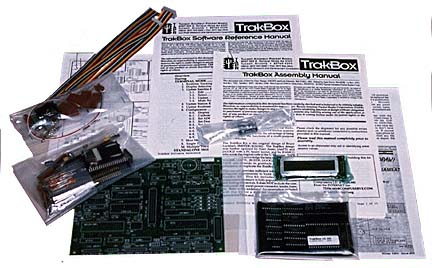
Should be able to finish up, test and hopefully *use* the TAPR Trakbox (btw, parts are in, but have to setup a "bench" to work on it)

Hope to "see" you on the air, if you want a satellite sched, reach out to KA2CZU on Zed, anytime!

73, Remember Jesus is the Reason for the Season! May you have a Peaceful, Blessed and Merry Christmas, Happy Holiday and a Happy New Year!


Friday, December 02, 2016

Thursday, December 01, 2016

TAPR Trakbox

I'm not sure I'm up to this task. It's been a while since I've done any serious soldering.

However, why not?  Why not get setup and give it a go. The price of the kit
was low enough to afford a learning opportunity.

I need to make this:

out of this:

using nothing but this:


Wednesday, November 23, 2016

Tracking

Really excited about a new project: The TAPR Trakbox


While no longer sold/made, I recently purchased a "new in box" kit, and plan on
mating this up with the KR500 el / and a CDE/Hy-Gain az, rotor combo, in conjunction with the
FT-736.

This will up my ability to do winter, nighttime, sat work, since that seems to be the
time when I have the most free slots, and will save having to stand outside in the weather.

Description from TAPR:


The trakbox is a self-contained, stand-alone accessory for use with satellite stations. You simply select the satellite you wish to track from a front panel control and the TrakBox will steer your antennas in both azimuth and elevation to track the selected satellite when it is or above your horizon. In addition, if you have a radio with a computer interface, the TrakBox will tune your transmitter and receiver and correct them for doppler shift.
Trakbox includes a serial port to allow you to set the real-time clock (which is battery backed), your station location (latitude, longitude and elevation) and the keplerian elements for the satellites you are interested in (up to 40 satellites may be loaded, and the elements may be uploaded in ASCII in either the AMSAT or NASA formats). A two-line LCD display is updated every second, showing the azimuth and elevation of a satellite, along with the satellite ID and GMT. Once set up, TrakBox no longer needs to be connected to any other computer to operate.

Tuesday, November 15, 2016

How To Work The Sats

In case you are looking for information on how to work the Amateur Radio Satellites, there are a few excellent resources.

AMSAT

The main resource available to all Amateur Radio Operators is AMSAT itself.

I recommend joining AMSAT and helping to contribute to the various initiatives, but even if you don't, then you can find some great info at their
Station and Operating Hints page

QRZ

Many operators hang out on the QRZ Satellite and Space Communications forum

As I told a relative, there are a few dozen hard hard core Sat operators in the USA.
These hams are like 24x7x365 on or about Amateur Radio Satellites.

At least it seems that way :)

The even better news is that most are enthusiastic about helping anyone try to get on the air!

Give a shout out, give it a try!

PSK again

ok, so I hadn't made much progress getting PSK setup.

Finally got my IC-706 working with FLDIGI courtesy of Steve from xggcomm fame.

Win10 Nextbook tablet - mini usb adapters, xggcomm icom / usb cable and voila: PSK31
decoding.

So, the goal is to get familiar using PSK31 on 20meters so that I can move onto my next experiment:

http://www.frontiernet.net/~aflowers/dopplerpsk/dopplerpsk.html
Here also are the latest elements for PSAT:
PSAT
1 90720U          15234.36512451 +.00008395 +00000-0 +21488-3 0 0099
2 90720 054.9897 293.1329 0244566 052.6872 309.6216 15.1526532401420
When PSAT-1 is using the PSAT-1 callsign, that means the digipeater is off. But as of now, PSK31 experimentation is authorized.
28.120MHz PSK31 uplink and 435.350MHz FM downlink.
Bob, WB4aPR


Monday, October 31, 2016

The Outernet

Bob Bruninga has recently posted info to the AMSAT community about an interesting, free, public satellite project:

There is one other GEO  (possible AMSAT related) project going on.  That
is the OUTERNET satellites.  These are 6 GEO birds covering the entire
globe that anyone can build a downlink-only receiver using a Rasberry-PI,
a 1m dish, an LNB and a DSP dongle to receive the free content.  Their
mission is to deliver WEB content (one way) to anyplace on Earth.  Their
satellites exist and are working...

The news is that the content provider is willing to carry ham radio
content too..

We are proposing to make the "system" two-way for hams by having the
OUTERNET content provider tap into the APRS-Internet system and look for
amateur radio related OUTERNET traffic.  This way, any ham radio operator
on earth can originate traffic into the APRS-IS system marked-for OUTERNET
either by any of the existing APRS digipeater birds, or terrestrial
IGates, or HF Igates and that traffic will get into the system and into
the OUTERNET downlink.

Hence, a 2-way system for hams and ham-wannabees.

All the pieces are there... we are just trying to see how it could be
used...  Again, the remote-user can only originate single packet like
content due to the extremely small APRS input pipe. But the remote user
can Recceive the entire GLOBAL feed of APRS internet traffic...  SO how to
use that very unbalanced 2-way pipe is the area that is ripe for
exploration.

Here are the thoughts so far.. http://aprs.org/outnet.html

Bob, WB4APR

Tuesday, October 25, 2016

Hak 5 and the world of Amateur Radio

A cool blog has shown up, with one of the hosts newly acquiring a Ham Radio License:

https://www.youtube.com/watch?v=JpaD0BX9yZM

Sunday, September 11, 2016

Cheap Antenna Control

The AMSAT BB reflector had a great post the other day from Scott K4KDR.

He directed folks to:
http://k3rrr.com/cheap-computer-controlled-tv-rotor-for-amsat-satellites-and-includes-free-satellite-tracking-with-pstrotator-and-the-usb-uirt/

Cheap Computer Controlled TV Rotor for AMSAT Satellites And Includes Free Satellite Tracking With PstRotator and the USB-UIRT


How would you like to have a complete, cheap computer controlled rotator system for working the current half dozen (soon to be at least 8) active ham radio satellites for a total cost of around $200 including rotator – with excellent satellite tracking software and rig control included for free? 

Thanks to friend Robin Moseley, G1MHU, I’ve been able to finally and cheaply implement computer control tracking with my equally cheap TV rotor that I use for working the AMSAT satellites.
On top of that, I even ended up with excellent satellite tracking software, as a bonus, that actually works exactly the way it is supposed to, for no extra charge!
I know there are a lot of newbies and even a lot of oldies that might have an interest in getting on the amateur satellites – but who have been turned off by the high cost of a computer controlled antenna system. This approach might be a game changer for those with limited dollars who still want to work the birds without spending $2,000 or more on the antenna system.

enjoy!

Wednesday, August 24, 2016

Decoding packets from 3CAT2

awesome work by a couple of hams... in recording and decoding this data...

no plagiarism... will just link over to let you read!

http://destevez.net/2016/08/decoding-packets-from-3cat2/

Tuesday, July 26, 2016

Beyond... way beyond

ok, I'll fess up. I look at drudge daily. Really shocking, eh?

at any rate, noticed an article about a "strange place" where cellphones and wifi are not allowed!

EEK, really?

yes, Virginia, there is a Santa Clause.

I won't plagiarize Drudge, or the local station... if you want, you can read about it here

United States National Radio Quiet Zone

United States National Radio Quiet Zone
The National Radio Quiet Zone is a large area of land in the United States in which radio transmissions are strictly restricted by law to facilitate scientific research and military intelligence. It is located in the states of Wes…

Monday, July 25, 2016

NPOTA by Satellite

There have been some great opportunities to work hams operating from various National Parks via Satellite.

The ARRL has been sponsoring an NPOTA (National Park On The Air) event spanning the entire country.  And they gave a great shoutout to satellite operations in the July newsletter:

the ionosphere isn’t feeling cooperative, and atmospheric conditions limit the distance some radio waves can travel. One way hams get around an uncooperative ionosphere is to use orbiting ham radio satellites as an intermediary. There are around a dozen satellites in orbit that are designed to relay ham radio signals on certain frequencies in the VHF -UHF portion of the radio spectrum. With only a few watts of power and a handheld directional antenna (as seen in the photo), radio amateurs can communicate through these satellites for as long as the satellite is above Earth’s horizon, which is usually around 10-15 minutes per pass. Each satellite makes about five passes over the US each day.

Thursday, July 14, 2016

FO-29

ok, eventually I will move away from the gee whiz posts, perhaps to some more meatier (meteor?) topics... but for now:

celebrating my first QSO using a linear transponder on a Low Earth Orbit satellite!

Managed a QSO, in spite of some deep fades due to fixed polarization, and no preamp.

"Sort of" getting the hang of tuning manually to find my signal, and then keep a QSO going reasonably well.

I had a lot of practice finding my signal on a the U/V XW satellites, but this time had a 60degree pass of the V/U FO-29 satellite.  That's up on 2 meters ("V" ... the first letter is what the satellite receives)
and down on 70cm ("U").


The Kenpro did a fine job, rotating the elk log periodic throughout the pass.

For now, all manual as I still don't have a computer I'm really comfortable using, at least not in the shack.

The only shack cpu cycles are being provided by a win10 tablet that lacks some I/O, or at least I've yet to get the I/O mini-usb to {whatever} working satisfactorily. Maybe work on getting port (and other settings) setup next, or just get a net/note book with full and more usb ports.

Monday, July 11, 2016

The XW sats

Finally had a couple of decent passes lined up.

Using the new rotor setup, had a 42deg pass of XW-2F, followed by
a 47deg pass of XW-2A.

Beautiful site lines for my QTH, AOS was at about 15deg, LOS about the same, for both Sats.

I'm in the shack.

N8HM, Paul, is a real amateur satellite 'heavy hitter'....  he's been working the sats HARD for many years now, and via email he gave me some tips on finding my sig, calculating doppler, for these sats.

Cool.

All set, watching my ipad tracking app.

Sats rise, I call out and wow, able to hear myself back in my FT-736R.

"CQ Satellite, hello, CQ CQ CQ Satellite, this is KA2CZU, Kilo Alpha 2 Charlie Zulu Uniform"

On I go, hearing myself, tracking through the entire sat. Occasionally tuning around for other signals.

Nothing, Nobody.

Just myself.

Ok, fine, it happens... no one on the East coast was ready to talk.

Up next, XW-2A... same drill, different satellite. Call CQ, no takers, hear myself fine... start tuning around and think I hear someone, but can't adjust the doppler properly.  Tune more, adjust the antenna and track through the pass.

Now, I'm thinking, this is ridiculous... I know this is a more popular Sat, and I think I heard others. What gives?

Simultaneous with the sneaking realization, someone else has heard me and will later send me a nice email: Hey, OP, this is {blah 8 blah blah blah} and I heard you on XW-2A, but you were  on the wrong sidebands.

DOH!

LSB up, gets inverted by the sat to, USB down.

I had my rig setup the opposite, and thus no one really wanted to waste a pass by switching themselves, telling me, and then trying to get back to working the pass.

I deserve it:

Friday, July 01, 2016

Rotation, part deux

Finally, Have the tripod and Elevation Rotor, which for some reason my old brain had translated into Yaesu whatever.

In reality, it's a Kenpro, KR-500, with matching controller:


This will allow pursuit of many more options, and basically will allow me to work
from my shack, gaining more expertise with the Yaesu FT-736R. 

This is a nice rig, pretty sensitive receiver, and I've had the most success (such that it has been) using this through the linear transponder sats.

If I run into a nice azimuth rotor deal, I may add that in, with commensurate satpc32 control.

However, for now, this is my basic setup: quick manual positioning of the tripod/antenna for optimal vertical rotation, position antenna for start, head into shack to complete, adjusting the angle for best signal.

Thursday, June 09, 2016

Rotation - Option 5


Just wanted to correct something with respect to portable, outdoor (or even indoor) operation.

I had listed 4 options for my shack:
  1. to go outside and manually position the antenna, that is go semi-portable with the FT-736R, which I've done... 
  2. get a second FT-817 to work full duplex, and then go outside
  3. only try to work FM satellites using my FT-817 plus a handheld, OR
  4. get some kind of antenna rotor/positioning system in place

In fact, I was overlooking using my SDRPlay SDR receiver... so, in the spirit of "completeness"
there is option:

     5. use SDRPlay with HDSDR as a satellite downlink receiver. For uplink, the FT-817

Wednesday, June 08, 2016

Rotation

So, my current plan is to keep using the FT-736R, as much to get totally comfortable with the rig as any other reason, and thus stay inside to work satellite passes.

This has posed a dilemma as, obviously, my antenna needs to be outdoors and working a satellite like XW-2A with a fixed position antenna only works for a portion of any given pass.

My home QTH is not the best for summertime satellite work with the density of trees and other factors, but for certain common passes, I can get by.

Therefore, I have several options:

  • to go outside and manually position the antenna, that is go semi-portable with the FT-736R, which I've done... 
  • get a second FT-817 to work full duplex, and then go outside
  • only try to work FM satellites using my FT-817 plus a handheld, OR
  • get some kind of antenna rotor/positioning system in place

Thankfully, my brother gave me an old G-550 elevation rotor, but had not tested it at all.

Yesterday, I hooked it up and it seems to work AOK. I have a sturdy tripod and now just
have to come up with some kind of boom arrangement to allow me to easily mount my Elk Log Periodic to the rotor. Seems simple enough.

By visual calculations, just having this arrangement should allow me to work many high passes without worrying about azimuth corrections. The Elk is not that high gain an antenna that precludes a decent signal up or down, except for perhaps the deafest of satellites (and there is at least one, AO-85, with that reputation).

"Stoked" for trying this out, is the word!

Monday, June 06, 2016

Optimal passes

For my home QTH, my best passes are ascending passes directly to the South or South-Southeast.

This gives me the clearest sky, and the best AOS-to-LOS coverage.

Ascending and Descending Nodes in Satellite Orbiting

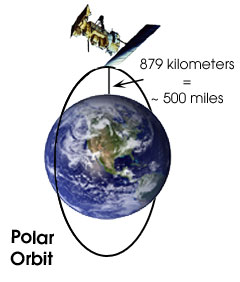
Many satellites that orbit the Earth are in orbits that are called polar orbits - that means that they go over both of Earth's polar regions, the Arctic and Antarctic. Satellites with this kind of orbit have an ascending node and a descending node of the orbit. The ascending node is when the satellite is traveling south to north over the Earth's surface. The descending node is when the satellite is traveling from north to south over the Earth's surface. 

XW-2A part 2

Had a decent pass, 46 degrees at TCA, of XW-2A yesterday. Made for a quicker pass than the last time, but I was a step ahead of myself. Knowing that I was successful through the transponder, I was ready with a few new frequencies.

Got on, found my signal and called CQ. Heard VE3HII come back but we couldn't quite complete the exchange for a full contact. Emails confirmed that we each heard the other correctly but, as  you know, it's the "on the air" exchange that counts for the log book, hi hi :)

Ordered a portable tripod, on which will be trying my kenpro elevation rotor.  Eventually may setup the az-el, but for most good passes here, the el rotor may actually be enough.  Low Earth Orbit satellites aren't that picky with a short beam like the Elk log periodic antenna, so I'm planning on trying a semi fixed position, but letting the elevation take the beam horizon to horizon on a pass.

For the stronger birds, it should work AOK.

Think I found my bird with which I'll complete my first Transponder satellite contact!

Best 73s (just had to write that for the humor-impaired)

Thursday, June 02, 2016

XW-2A and NO-84

So, I continued with another pass of XW-2A and found the same booming strong downlink.

I did try to work N8HM, unfortunately I'm not experienced enough on linear transponders and it took me until the end of the pass to find my signal through the satellite.

The good news is that Paul gave me some helpful hints on compensating for doppler and I did eventually find my signal. It should be easier the next time. Also working on a portable tripod/rotator setup to allow working from the shack FT-736R a bit easier, more consistent signal. Right now, I've just been choosing passes that allow the relatively strong signal to hit the sat from a fixed position.
XW-2A has a good receiver and healthy downlink so this is a good sat for working this way.

For now :)

Onto an NO-84 pass, I was looking for the FM PSK31 downlink... took a while to find, but no signals in the waterfall. Getting closer, I'm going to continue to monitor for PSK31 traffic before attempting to send.

Progress, ever steady, though slow by some standards :)

73!

Monday, May 23, 2016

XW-2A Surprise

Yesterday, I had a little bit of free time, so I decide to setup my elk log periodic 2 band antenna at a fixed SW direction, maybe 35 degrees elevation, and try to listen for a few new satellite beacons.

http://amsat.org.ar/pass has a nice little site giving a rolling list of satellites coming into view over your QTH.

I attempted to listen for, what were to me, obscure satellites using my FT-736r.  After a few failed passes, that is with nothing heard, finally XW-2A came up.

XW 2A or CAS 3A (Chinese Amateur Radio satellite 3A) is a Chinese micro-satellite for atmospheric physics experiments and amateur radio missions. The satellite features a 398 mm × 398 mm × 398 mm cubic body with body mounted solar cells and a mass of approximately 25 kg mass. It features a three-axis stabilization system. The amateur communications payload consists of U/V 20 kHz wide transponders with 145 MHz CW beacon and 19k2 GMSK AX25 telemetry downlinks.

I listened in on 145.660 + doppler which brought it in around 145.663 and found a very very strong cw beacon... hope to put the recording up on box later tonight

Then I swung over to the transponder and found some really really nice signals.

I had never setup my rig for full duplex satellite use before, so pulled out the book and started fiddling around with VFOs and settings, all the while listening in on some QSO's

Eventually I heard my signal, which was cool, however I couldn't get the tuning right in order to engage the other ham operator's call (CQ).

Next time I'll be ready!

Sunday, May 22, 2016

Slow as a snail

That's about how fast I progress toward getting on PSK31. Just seem to have too many balls in the air.

However, my 10 meter antenna is back up, and that's the uplink for NO-84.

Now onto getting receiving working to the computers!

Thursday, April 21, 2016

ISS

Managed my first *confirmed* Satellite QSO via ISS Packet on Tuesday

Used a

Baofeng UV-5R
To a Mobilinkd TNC2:


and APRSdroid running on a Motorola A855


all signals copied via an Elk Yagi


confirmed in the ARRL Log Book of the World!

edit: I should note that if I had substituted my homebrew 2mtr yagi (I did in fact work ISS packet last summer using the homebrew ant)... then this would possibly qualify as the lowest cost satellite packet setup around: the boafeng can be purchased for $35, the android phone (wifi only) was purchased for $10,  the mobilinkd tnc2 was fairly inexpensive as well....

Wednesday, March 30, 2016

Up and Away

So, I'm getting close to PSK-31 on NO-84

Close, in that I have the 10 mtr vertical (1/2 wave) up, and a tripod with
an elk for the 70 cm downlink.

Still have to get PSK-31 actually working, along with the satpc32 doppler/rig control
setup.

Looking for another shack pc to use, instead of the tablet. Tablets are "nice" but not
really user friendly for PSK-31 use.

So, more likely I'll get a cheap laptop and setup "something"

We'll see and keep the blog posted as actual progress is made

Monday, February 29, 2016

Control

In my quest to build out capabilities, I've been looking at semi-portable antenna setups.

I home brewed the "AMSAT" cheap satellite antennas, using foam and aluminum wire to actually get on the air with a couple of Baofeng HT's last year.

I eventually upgraded and setup my home station with an FT-736R, FT-817 and an Elk dual band log periodic antenna.

However, my brother W1GGM/7 just "bequeathed" (no, he has not passed on just yet... ) a
Yaesu G500A elevation rotor!  One half of the AZ-EL equation for base operation!

Therefore, I'm going to be looking into some kind of antenna tripod, azimuth rotor and dual antenna (likely) arrangement and try to match this up with SatPC32!

Great, more projects :D

Sunday, February 14, 2016

A Happy Valentine's Day to South Jersey... from Space

Today's NOAA-19 19:10z pass over the east coast came out nice, showing the Grand State of South Jersey's severe-clear conditions right now.

It's cold at around 20F, light breeze, but it is SUNNY :)

Thursday, February 11, 2016

Beyond voice

So in this new world of Satellite operation, I've been slowly, ever so slowly, catching up on digital technology, software, satelllite telemetry, and working other modes.

For some reason, I still want to hit my thumb with a hammer, so I stay off the simple things and jump right into what, for me, is the most complicated of approaches.

Sure, a grade school girl can, with the help of her dad, work all the FM satellites that pass on the east coast, but I'd like try to understand the world of SDR, digital modes, rig control, and yes eventually satellite antenna control, all via a Nextbook 8" win10 tablet if possible.

So far, I was able to try two SDR receivers:
  • The RTL-SDR dongle and
  • The SDRPlay SDR receiver

Both have their upsides.

The RTL-SDR/SDR# and WXtoIMG combo seems to consume fewer CPU cycles than the
SDRPlay/HDSDR/WXtoIMG combo for receiving satellite images. However, I seem to more consistently get decent images out of SDR# than HDSDR. Haven't quite figured that out yet.

A recent and decent image I received is from NOAA-19:


an earlier image that was a little less clear, from NOAA-18:


Monday, January 11, 2016

ReArrangements

Took advantage of the warm weekend to get up and rearrange some things.

I took down my my non-functional Ambient WS-2080 weather station and installed an MFJ-1754 onto the same mast. Ran the LMR-240 back to the shack.

Also setup an A99 10 mtr vertical, and re-arranged things in the shack so that I will be better positioned for PSK31 operation, once I figure out a way to tie together everything via software.

For NO-84, the architecture is a 10mtr uplink and a 70cm downlink so I need two antennas,
and two clients, one running a Doppler compensating software package up through the A99,
and the other a regular PSK31 client connected to the 70cm downlink.

Yesterday, I tested the receive portion using SDRplay SDR + HDSDR software, listening in on a decent pass of the ISS. I heard the AX.25 packets fairly clearly and that really was encouraging.

It was the first valid data stream I've seen via HDSDR. I didn't try decoding it, but am confident if AX.25 came through that clearly, I should have no trouble listening for a PSK31 stream, even on the much weaker downlink for a cubesat like NO-84.

Thursday, January 07, 2016

PSK-31 and HDSDR

My next project in the satellite world will be to attempt working PSK-31 through NO-84 or any other satellite that supports this mode.

First goal is to get my new Software Defined Radio, SDRplay, working using some software.

Check. Can receive.

Second goal is to get this hooked up with a digital mode software, running on my win10 tablet.

Working on this.

....

Final goal will be to get a PSK-31 transmission through a satellite, 10mtr uplink, 70cm downlink.

Stay tuned!

Monday, January 04, 2016

Progress

Having time that aligns with satellite passes is always a challenge.

Having to work Satellites manually, without aid of rotors, is a bigger challenge.

I was on FO-29 last week and finally found myself on the downlink, by whistling.
However, in the process, I called "CQ Satellite" a few times and stepped on a pileup
created by Yuri UT1FG/MM.  Big OOPs.

I worked using my FT-736R on the 2 meter uplink and the FT-817 on the 70cm downlink,
though there was no particular reason, other than the few extra watts the 736 puts out.

Throughout the pass, I manually tracked the sat using my Elk Yagi, mounted on a tripod.
It was clumsy, but it worked.

Now I need to figure out how to hear myself better. Perhaps using CW and making sure via
charts that I am not intentionally stepping on anyone.

Our friend, Doppler, got me this time.

Not again, my friend !  :D

Tuesday, December 15, 2015

Connectors

With the decline of the hobby electronics industry, here in New Jersey we have lost essentially all stores which stock cable, connectors and parts for electronic, specifically amateur radio, pursuits.

As such, I'm relegated to ordering connectors via an online supplier or, typically, amazon.

Here there are a plethora of Chinese suppliers who seem to provide perfectly adequate connectors.

IF they get the order right.

A big "IF"

Wednesday, December 09, 2015

Shack Picture

Update 1/4/2016:

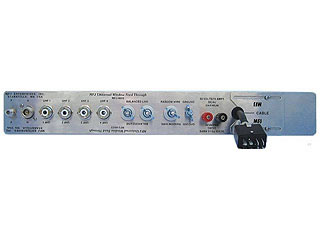
New home for my current rigs:

  • IC-706
  • FT-736R
  • FT-817 and lastly
  • SDRplay SDR

Have an MFJ through-window feed panel and power supply setup.

Have 3 antennas outside, not permanently mounted yet:

  • A99, 10mtr 1/2 wave vertical
  • Elk 2m/70cm Log Periodic Yagi
  • MFJ 2m/70cm onmidirectional


Hey, I'm getting there :)

Monday, December 07, 2015

Satellite PSK

http://st2nh-blogger.blogspot.com/2013/11/satellite-psk.html

currently setting up a new home shack, have the components and among other
thinks... will try Sat PSK via IC706 -> up to a FT-817 down

edit: I think I'll actually be using the FT-736R down.... but we'll see :)

Should be fascinating!


Thursday, December 03, 2015

Destroy this one, and they'll all go.

I think this line by Spock, in Star Trek TOS, was the single reason I went into computers, even though I saw this episode years before my first encounter in a computer lab at Montclair State.

SPOCK: This one's the key. The circuit is now locked. Destroy this one, and they'll all go. 


Note that in my high school, learning about "computers" meant learning basic and submitting jobs through punched cards. I didn't take a computer class until freshman year in college.

I will also note that I never rose to greatness (big deal LOL) in either programming or position.

I have, however, been gainfully employed and have always enjoyed the technology and techniques applied to our world via the bits and bytes deployed in computers.

Now what is it about Satellites that drew me back to Ham Radio?

A sense of "fun"? Something different? Not sure.

One thing I'm sure of is that I'll never rise to "greatness" within the Ham Satellite community, but will definitely enjoy the ride of learning, and sense of adventure, as I point an antenna to an anticipated point of AOS and follow a track through LOS!

Tuesday, December 01, 2015

AO-85

Had the Elk out over the weekend:
Tried listening to a pass of ao-7. Totally dead, not even a beacon heard on a 60deg pass.

Then caught a nice pass of AO -85...strong as expected but with a lot of fading/dips. Did an a/b comparison to check out with or without my MFJ-916b duplexor with pleasant results using the ft-817

Next I will be checking out a good pass using the rtl-sdr using HDSDR on a nextbook tablet.

I do have several additions on order for "the shack"

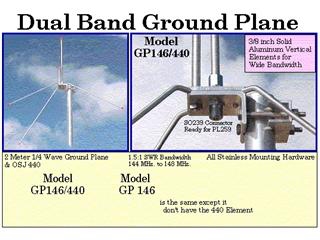
1. An Arrow GP146/440 antenna for general weather sat/highpower sat listening:
 2. An MFJ-4603 window feed through panel:
  
and

3. An SDR-PLAY software defined receiver:

 http://www.hamradio.com/images_manuf/H0-014408A.jpg


Saturday, October 31, 2015

The Elk

no, not the animal, but an Antenna:

picked up one of these:


Listened to a pass of AO-85.

More later

73,
KA2CZU

Tuesday, October 13, 2015

Oy Vey

so much has happened, and my hope of keeping this blog updated has faded than the worst tumbling satellite without adjusting for doppler shift, dipping behind the LOS horizon!

bottom line is that I'm all geared up, but without much time to get on the air!

Perhaps I'll be able to utilize some cold weather times for standing outside with a yagi pointed in the air ... DOH! :D

Wednesday, July 22, 2015

ISS SSTV

not for me... schedule didn't allow

ARISS SSTV images were transmitted this weekend from the amateur radio station in the ISS Russian Service Module to commemorate the 40th Anniversary of the Apollo-Soyuz Mission.
40 years ago this week, the historic joint Apollo-Soyuz mission was conducted. Apollo-Soyuz (or Soyuz-Apollo in Russia) represented the first joint USA-Soviet mission and set the stage for follow-on Russia-USA space collaboration on the Space Shuttle, Mir Space Station and the International Space Station.
Below images that where received during the night between the 18th and the 19th of July with a FUNcube Dongle Pro+, SDR# and RX-SSTV.
ISS-SSTV-19072015
ISS-SSTV-19072015
ISS-SSTV-19072015
ISS-SSTV-19072015
ISS-SSTV-19072015

Thursday, July 16, 2015

Satellites - APRS on Ham Radio Sats

Since the last time I was really active on Ham Radio was at Tinton Falls... I'm reclaiming this blog for my personal Sat adventures, to log notes, and remind myself of what the heck I'm up to :)

anyhow, Sats are free, if you're a ham operator.

some notes on two sats from Patrick:

Date: Wed, 15 Jul 2015 14:07:33 +0000
From: "Patrick STODDARD (WD9EWK/VA7EWK)" <amsat-bb@wd9ewk.net>
To: "amsat-bb@amsat.org" <amsat-bb@amsat.org>
Subject: Re: [amsat-bb] Can't digipeat APRS thru satellites
Message-ID:
    gh4fLseAV5zq7onVv-gHopHzD2M3WZLMo-TCijmbLQ@mail.gmail.com
>
Content-Type: text/plain; charset=UTF-8

Mark,

If you are trying to digipeat through NO-44, you will need to use
W3ADO-1 as the path. For NO-84, it won't digipeat anything sent
via PSAT, but you can use ARISS or APRSAT for the path. I have
not used NO-44 in a while, but when it is getting enough power
from its solar panels it does work with W3ADO-1. NO-84 is actually
a good APRS digipeater, even though not many stations are picked
up by the Internet gateways. It is possible that the gateways that
work fine with the ISS and its stronger signals just don't do as well
with the weaker signals from NO-84. With my TH-D72A and Elk, I
hear NO-84 well, and it seems to hear me OK once it is up a few
degrees above the horizon during its passes.

Hope to see/hear you soon on NO-84. I have logged one packet
QSO on that satellite, and will try for more. I also want to try the
10m/70cm PSK31 transponder, but for now my TH-D72A and Elk
antenna is able to use NO-84's packet digipeater well.

Good luck, and 73!

Tuesday, October 15, 2013

Friday, June 14, 2013

The Hock

Stopped by the Hockhockson at (whatever the old Grist Mill Restaurant is called nowadays) over the past weekend.

River was blown out due to 2013's first tropical storm of the season, Andrea


Thursday, December 31, 2009

Gone but not forgotten

We have finally left Tinton Falls for the confines of Smithville.

The new homestead:

Thursday, November 12, 2009

Tuesday, October 06, 2009

Forsale No Longer

Well the homestead is sold. Closing in less than 2 weeks. Now to get a Certificate of Continued Occupancy. Wow, what a hassle!

Tinton Falls used to be a friendly town to work with, but the folks down at the town hall look harried and unhappy. I have no idea what the new mayor and staff have done, or what has transpired since old Mayor Ann M left, but Tinton Falls is no longer a friendly place.

We will be moving at some point, hopefully when planned, hopefully our closing won't be delayed by unhappy bureaucracy.

And this is in a down housing market. Imagine if sales were up??? I can't, given what I've seen and dealt with.

And Free? Nothing is free anymore.

Used to be a song "Signs", but now should be replaced by "Forms":

Forms, forms everywhere a form
Blocking out progress, ruling the norm
Do this, don't do that, don't you have a form?!

Thursday, September 24, 2009

Life Lessons

Written By Regina Brett, 90 years old, of Cleveland, Ohio.
>
> "To celebrate growing older, I once wrote the 45 lessons life taught me.
> It is the most-requested column I've ever written. My odometer rolled
> over to 90 in August, so here is the column once more."
>
> 1. Life isn't fair, but it's still good.
>
> 2. When in doubt, just take the next small step.
>
> 3. Life is too short to waste time hating anyone.
>
> 4. Your job won't take care of you when you are sick. Your friends and
> parents will. Stay in touch.
>
> 5. Pay off your credit cards every month.
>
> 6. You don't have to win every argument. Agree to disagree.
>
> 7. Cry with someone. It's more healing than crying alone.
>
> 8. It's OK to get angry with God. He can take it.
>
> 9. Save for retirement starting with your first paycheck.
>
> 10. When it comes to chocolate, resistance is futile.
>
> 11. Make peace with your past so it won't screw up the present.
>
> 12. It's OK to let your children see you cry.
>
> 13. Don't compare your life to others. You have no idea what their
> journey is all about.
>
> 14. If a relationship has to be a secret, you shouldn't be in it.
>
> 15. Everything can change in the blink of an eye. But don't worry; God
> never blinks.
>
> 16. Take a deep breath. It calms the mind.
>
> 17. Get rid of anything that isn't useful, beautiful or joyful.
>
> 18. Whatever doesn't kill you really does make you
> stronger.
>
> 19. It's never too late to have a happy childhood. But the second one is
> up to you and no one else.
>
> 20. When it comes to going after what you love in life, don't take no
> for an answer.
>
> 21. Burn the candles, use the nice sheets, wear the fancy lingerie.
> Don't save it for a special occasion. Today is special.
>
> 22. Over prepare, then go with the flow.
>
> 23. Be eccentric now. Don't wait for old age to wear purple.
>
> 24. The most important sex organ is the brain.
>
> 25. No one is in charge of your happiness but you.
>
> 26.. Frame every so-called disaster with these words "In five years,
> will this matter?"
>
> 27. Always choose life.
>
> 28. Forgive everyone everything.
>
> 29. What other people think of you is none of your business..
>
> 30. Time heals almost everything. Give time time.
>
> 31. However good or bad a situation is, it will change.
>
> 32. Don't take yourself so seriously. No one else does.
>
> 33. Believe in miracles.
>
> 34. God loves you because of who God is, not because of anything you did
> or didn't do.
>
> 35. Don't audit life. Show up and make the most of it now.
>
> 36. Growing old beats the alternative - dying young.
>
> 37. Your children get only one childhood.
>
> 38. All that truly matters in the end is that you loved.
>
> 39. Get outside every day. Miracles are waiting everywhere.
>
> 40. If we all threw our problems in a pile and saw everyone else's, we'd
> grab ours back.
>
> 41. Envy is a waste of time. You already have all you need.
>
> 42. The best is yet to come.
>
> 43. No matter how you feel, get up, dress up and show up.
>
> 44. Yield.
>
> 45. Life isn't tied with a bow, but it's still a "gift."

Sunday, April 12, 2009

He Is Risen! He Is Risen, indeed!


The Gospel (good news) of the Apostle Matthew 28:6 "New American Standard Bible (©1995)
"He is not here, for He has risen, just as He said. Come, see the place where He was lying."

There is no other leader who has risen from the dead.

Jesus' resurrection is proof that He is the One True God, Lord of All, and that He has fulfilled His promise of redeeming mankind from the just penalty of sin.

There is no other name under heaven by which we can be saved: The "Name" is that of Yeshua Ha Meshiach, Jesus The Messiah, The Christ. In whatever language you read or translate it, it means the same: The Savior, The Anointed One, God's only son.

Don't get hung up by skeptics... today *is* the day in which your life can be changed. Once and for all.

Don't get hung up by hypocrites... The Lord knows there is room in heaven for one more ;)

Don't get hung up by science... Science is discovering that which God created and nothing discovered will ultimately do anything but reveal God to you in a new marvelous way. Psalm 19 proclaims: "The heavens declare the glory of God; and the firmament proclaims his handiwork....

But one fact remains and was testified over a period of many days, and with hundreds of witnesses and never contradicted by historical, legal, governmental record: Jesus rose from the dead.

He is Risen! He is Risen, indeed!!