Monday, May 07, 2018

FM Satellite Frequency Summary and Programming Charts


FM Satellite Frequency Summary and Programming Charts

SO-50
Channel #
Alpha
TX Freq
TX Tone
RX Freq
RX Tone
501
50 +2
145.850
67.0
436.805
None
502
50 +1
145.850
67.0
436.800
None
503
50 74
145.850
74.4
436.795
None
504
SO-50
145.850
67.0
436.795
None
505
50 -1
145.850
67.0
436.790
None
506
50 -2
145.850
67.0
436.785
None

AO-91 (Fox-1B)
911
AOS 2
435.240
67.0
145.960
None
912
AOS 1
435.245
67.0
145.960
None
913
AO-91
435.250
67.0
145.960
None
914
LOS 1
435.255
67.0
145.960
None
915
LOS 2
435.260
67.0
145.960
None

AO-92 (Fox-1D)
921
AOS 2
435.340
67.0
145.880
None
922
AOS 1
435.345
67.0
145.880
None
923
AO-92
435.350
67.0
145.880
None
924
LOS 1
435.355
67.0
145.880
None
925
LOS 2
435.360
67.0
145.880
None

AO-85 (Fox-1A)
Fox-1A Doppler Shift Correction
Your Transmit Frequency (with 67 Hz tone)
Your Receive Frequency
AOS (Mem.1)
435.170 MHz
145.980 MHz
Approaching (Mem.2)
435.175 MHz
145.980 MHz
Passing (Mem.3)
435.180 MHz
145.980 MHz
Departing (Mem.4)
435.185 MHz
145.980 MHz
LOS (Mem.5)
435.190 MHz
145.980 MHz

Fox-1 Series UHF Transmit Doppler Shift Correction
Transmit with
67 Hz CTCSS on all
uplink frequencies
Fox-1A (AO-85)
Receive 145.980
RadFsSat/Fox-1B
(AO-91)
Receive 145.960
Fox-1Cliff
Receive 145.920
Fox-1D (AO-92)
Receive 145.880
AOS (Mem.1)
Fc - 10 KHz *
Fc - 10 KHz
Fc - 10 KHz
Fc - 10 KHz
Approaching (Mem.2)
Fc - 5 KHz
Fc - 5 KHz
Fc - 5 Khz
Fc - 5 KHz
Nearest (Mem.3)
Fc = 435.170 MHz
Fc = 435.250 MHz
Fc = 435.300 MHz
Fc = 435.350 MHz
Departing (Mem.4)
Fc + 5 KHz
Fc + 5 KHz
Fc + 5 KHz
Fc + 5 Khz
LOS (Mem.5)
Fc + 10 KHz
Fc + 10 KHz
Fc + 10 KHz
Fc + 10 KHz


Frequencies for Fox-1A, B, Cliff, and D

Uplink FM (67 Hz tone)
Downlink FM
Fox-1A (AO-85)
435.170 MHz
145.980 MHz
Fox-1B (AO-91) / RadFxSat
435.250 MHz
145.960 MHz
Fox-1Cliff*
435.300 MHz / 1267.300 MHz **
145.920 MHz
Fox-1D (AO-92)*
435.350 MHz / 1267.350 MHz **
145.880 MHz

AMSAT Fox-1 Satellites


Uplink FM
Downlink FM
Comments

(67 Hz CTCSS)


AO-85 (Fox-1A)
435.170 MHz
145.980 MHz
Operational


AO-91 (RadFxSat / Fox-1B)
435.250 MHz
145.960 MHz
Operational


AO-92 (Fox-1D)
435.350 MHz &
145.880 MHz
Operational

1267.359 MHz*


Fox-1Cliff
435.300 MHz &
145.920 MHz
Launch Summer 2018

1267.300 MHz*


* Switchable by command station. Not operational simultaneously.


SO-50 (SaudiSat-1C)


Uplink FM
Downlink FM
Comments

(67 Hz CTCSS)


SO-50
145.850 MHz
436.795 MHz
Operational


SO-50 also has a 10 minute timer that must be armed before use. Transmit a 2 second carrier with a CTCSS tone of 74.4 Hz to arm the timer.


CAS-3H (LilacSat-2)


Uplink FM
Downlink FM
Comments


CAS-3H (LilacSat-2)
144.350 MHz
437.200 MHz
Operational


When FM transponder is not on, there is a telemetry beacon on 437.200 MHz (LilacSat-2 Home Page). The FM transponder is on no set schedule. For real time updates about which mode the satellite is in, see the AMSAT Live OSCAR Satellite Status Page


IO-86 (LAPAN-A2)


Uplink FM
Downlink FM
Comments

(88.5 Hz CTCSS)


IO-86 (LAPAN-A2)
145.880 MHz
435.880 MHz
Operational


FUNcube on ESEO


Uplink FM
Downlink FM
Comments


FUNcube on ESEO
1263.500 MHz
145.895 MHz
Launch 2018


Also downlinks 4k8 BPSK telemetry


Duchifat3


Uplink FM
Downlink FM
Comments


Duchifat3
145.970 MHz
436.400 MHz
Launch Late 2018


Also downlinks 9k6 BPSK AX.25 telemetry 437.475 MHz. Possible 145.825 MHz APRS transceiver.


K2SAT


Uplink FM
Downlink FM
Comments


K2SAT
145.980 MHz
435.835 MHz
Launch H2 2018


Telemetry downlink 435.835 MHz. Data downlink 2404 MHz (2 mbps QPSK).


Diwata-2


Uplink FM
Downlink FM
9Comments


Diwata-2
43X.XXX MHz
145.XXX MHz
Launch Q2 2018


Also includes APRS and a CW beacon.


Tuesday, November 21, 2017

Good Blog Review: Radio Science for the Radio Amateur

very interesting review of this book found at: http://onetuberadio.com/2013/11/23/book-review-radio-science-for-the-radio-amateur-by-eric-nichols-kl7aj/

Friday, August 11, 2017

AO-85 SSTV

This has been fairly well communicated across the Satellite community, buy hey, I'm always a bit late to the party :)

From Andrew KO4MA:

With the recent popularity of Slow Scan Television (SSTV) from the
ISS, AMSAT Operations is bringing back Experimenter’s Wednesday to AO-
85.

On a trial basis, we invite users to exchange pictures using Robot
36 SSTV mode via the FM repeater on AO-85 during UTC Wednesdays.
Please identify prior to beginning transmissions, and only send when
the uplink is clear.

Stations are requested to only uplink if they have a reasonable
expectation of maintaining a full-quieting signal for the duration of
the image transmission.

Smaller stations are encouraged to focus on receiving the images.

Please don’t send questionable or provocative images. If in doubt,
pick another one.

Expect all ages to be participating.

Feedback is encouraged, and comments may be directed via email to: ko4ma at amsat dot org.

=====================

This past Wednesday, I did manage to snag a couple of noisy pics... interesting to listen
to the FM QSOs coming in between SSTV images on the pass.


Wednesday, August 09, 2017

Just Another Science Blog: Ham Radio at the South Pole!

Just Another Science Blog: Ham Radio at the South Pole!: As I think I have mentioned, I am involved in amateur or ham radio. My callsign is AI4LX for the those who are interested. It is a hobby I h...

Wednesday, August 02, 2017

A Slovak Satellite

Somewhere in Slovakia, outside of Bratislava, I still have some relatives... common descendants from my grandparent's family's.

Perhaps someone I'm related to, worked on the skCube, who knows? :D

But to listen for this satellite, Robo OM1LD gave some great info:

Watch digipeater mode on telemetry packet COM (DK3WN sw decoder)
If zero than digi is OFF. Any value is ON. Value is a time to end (minutes).
Take Your packet immediately after rx COM packet

AX.25 GMSK 9k6 (g3ruh) UI frame
Unproto CQ
TXdelay 15 to 25 (by the tcvr, short is better)

Uplink and downlink for DIGIMODE is a 437100kHz +/- doppler

swl report and more info
http://www.skcube.sk/skcube/swl-skcube-report/

Digipeater is switch on demand or follow this source.

https://twitter.com/OM3KAA
https://www.facebook.com/OM3KAA/
https://www.qrz.com/lookup OM9SAT

73!
Robo 

... I also went to the skcube web site direct and (with the help of google translate) found this:


First Slovak satellite is great success especially for young researchers: Slovak president
Source: Xinhua| 2017-07-04 21:19:30|Editor: Yurou Liang

BRATISLAVA, July 4 (Xinhua) -- Slovakia's first satellite skCUBE is a remarkable success for the young people who took part in launching and operating it. Slovak President Andrej Kiska announced at a briefing here on Tuesday.

The skCube has successfully operated more than ten days and has fulfilled its tasks.

"It's a great success for the young people who have contributed towards the fact that we have our first satellite. I'm happy, as I heard that we'll have a first Slovak selfie taken by the Slovak satellite - it'll take a picture of Slovakia from above," stressed Kiska.

The skCUBE satellite was launched into space on June 23. It's now orbiting the Earth at 7.8 kilometres per second at an altitude of more than 500 kilometres.

Its mission is to perform various experiments in radio communications, to send back pictures of the Earth, to measure various phenomena in high orbit and the magnetosphere and to test the effects of radiation on its onboard components.

KEY WORDS:Slovak

http://www.skcube.sk/faq/ (via google translate... although slovak is my heritage :) )

Q?
Why did you decide to build a satellite?
A.

Because we love flying into the universe! Astronauts, rockets, satellites - these are, in particular, cutting-edge technology, new insights and a huge adventure of discovering new worlds. In addition, space exploration brings mankind to new technological innovations for everyday life - just remember the GPS satellite navigation you have on your phone. And small and relatively inexpensive CUBESAT satellites present today a very modern direction, often serving to quickly test new technology concepts, such as solar sailboats. In the near future, the Cubes will also fly to the Moon or even to other planets. Would not you like to send something that you own?
Q?
When and how will skCUBE fly into space?
A.

The launch of skCUBE into orbit around the Earth is provided by the Dutch company Innovative Space Logistics. The launch of the satellite has been postponed several times due to the problems of Falcon 9 rocket American SpaceX. The current scheduled start window is set for the second quarter of 2017.
Q?
Is the satellite on the racket alone?
A.

The launch of the rocket that will take place in the space of the skCUBE satellites takes place mainly for the purpose of rendering the large Taiwanese satellite Formosat 5 together with more than 80 smaller satellites from all over the world, including the Slovak skCUBE satellite.
Q?
How long will the satellites run around the Earth?
A.

This is the so-called " "Sun-synchronous orbit," ie a polar run at a height of 450-720 km above the Earth's surface, with a slope of about 98 degrees to the Earth's equator. The satellite on this track enters the Earth about once every 90 minutes, flying at a speed of 28,000 km / h (7.8 km / s). Although this route was determined by the primary customer of the Formosat 5 launch, it is very well suited to the scientific purpose of the first Slovak skCUBE satellite.
Q?
Why does not the spacecraft fall back from Earth?
A.

Basically, it holds inertia in the orbit. As the satellite targets the Earth at a high speed, The first cosmic, moreover in an environment where it does not have to stop it (at a given height of 450-720 km, Earth's atmosphere almost does not exist), the satellite collides with the free fall of the planet below.

You can imagine this too: say you stand on a high tower from which you throw golf balls. If you strike weakly, the ball will fall near the tower. If you hit harder, it will fly further, but eventually it will fall back to the ground. If you continue to increase the speed of the strike (and you do not feel the atmosphere), you would be steadily going further - to the neighboring state, to the suburban continent, until you reach a speed of about 8 km / s when the ball can not fall back - it would get into its own orbit around the planet.

This idea was formulated as the first Sir Isaac Newton in 1728.
Q?
How long will skCUBE be in the universe?
A.

The satellite itself is designed to operate in the universe for about two to three years, although it can last even longer. However, the satellite's internal batteries, which are up to 16 times charged and discharged daily, are probably the first to fail. The number of these charging cycles is limited to about 10,000. After the satellite shuts down, it will continue to ring around the Earth like a dead body. The residual Earth's atmosphere (a few molecules per cubic kilometer) will continue to slow down the satellite very slowly, thereby losing the satellite at its height. In the course of a decade, satellite below 100 km will drop into the more intense layers of Earth's atmosphere, which will naturally worsen as a meteor.
Q?
What are the risks for spacecraft in the universe?
A.

The space over the earth's atmosphere is very cruel. There is a deep vacuum, temperatures are floating from -170 to +125 ° C, and they do not protect you from direct sunlight, including dangerous X-rays or UV rays. But the launch of the rocket itself is not without risk. The satellite must survive the following conditions in the racket:

- Overloading 6 to 8.5 G
- sine vibrations of about 100 Hz,
- Acoustic vibrations of up to 131 dB,
- stochastic shocks and, in particular, shock waves with forces of up to 1000 G (at the time of first missile separation)


If the rocket explode or otherwise does not fail when placed cargo into orbit, where spacecraft survives rough start missiles, become jammed in the discharge container, neupečie her radiation from the sun and misses it or micrometeorite or other piece of space debris, we hopefully expect that the signal capture Some of our ground stations.
Q?
What tasks will skCUBE do in space?
A.

The satellite is designed to contribute in addition to technical and Vedek experiments and popularization of space research in Slovakia. It has multiple experiments. A satellite camera will scan the Earth and we would like to take pictures of Slovakia, respectively. Central Europe. For the general community radio amateurs will be opportunity to tune into the frequency and listen to the broadcast in Morse code. It will also be able to send a satellite to its own report, which followed repeated satellite (degepeater) to

Tuesday, June 27, 2017

ISS

With my homebrew 2mtr Yagi (picture of me and the yagi on stand below :) ) and the TH-D72A... getting into some nice passes of the ISS.

Note that I worked in the parking lot while at work, in Mr. Laurel, but here's a pic showing the yago in the foreground:


I worked both a 21deg and 61deg pass of the ISS this afternoon:

00:00:05:49 : 9Z4DZ-3]CQ,RS0ISS*,qAR,9Z4DZ-6::RS0ISS :Hello All. UISS v.5.4.0
00:00:06:00 : 9Z4DZ-3]CQ,RS0ISS*,qAR,9Z4DZ-6:=1008.45N/06132.30W-Greetings frm 9Z4DZ in FK90FD {UISS54}
00:00:06:22 : RS0ISS]CQ,qAR,9Z4DZ-6:]ARISS - International Space Station
00:00:06:23 : 9Z4DZ]CQ,RS0ISS*,qAR,9Z4DZ-6:=1008.45NI06132.30W&SatGate Siparia FK90fd
00:00:06:41 : 9Z4DZ]CQ,RS0ISS*,qAR,9Z4DZ-6::RS0ISS :Hello All. UISS v.5.4.0
00:00:06:54 : 9Z4DZ]CQ,RS0ISS*,qAR,9Z4DZ-6:Email: s9z4dz@yahoo.com.. 73 via ISS
00:00:06:58 : 9Z4DZ]CQ,RS0ISS*,qAR,9Z4DZ-6:=IIBPL]vY9& BSatGate Siparia FK90fd {UISS Ver 5.4.0}
00:00:07:02 : 9Z4DZ]CQ,RS0ISS*,qAR,9Z4DZ-6:Software: UISS 5.4.0 / UI-View V2.03
00:00:07:05 : 9Z4DZ]CQ,RS0ISS*,qAR,9Z4DZ-6:Hi All! UISS v5.4.0
00:00:07:12 : 9Z4DZ]CQ,RS0ISS*,qAR,9Z4DZ-6:=1008.45N/06132.30W-Greetings frm 9Z4DZ in FK90FD {UISS54}
00:00:07:27 : 9Z4DZ]CQ,RS0ISS*,qAR,9Z4DZ-6:=1008.45N/06132.30W-
00:00:07:30 : 9Z4DZ]CQ,RS0ISS*,qAR,9Z4DZ-6::Heard :YB0X-1,9Z4DZ-7,PSAT-1{UISS54}
00:00:07:34 : 9Z4DZ]CQ,RS0ISS*,qAR,9Z4DZ-6:Email: s9z4dz@yahoo.com.. 73 via ISS
00:00:07:43 : 9Z4DZ]CQ,RS0ISS*,qAR,9Z4DZ-6::ISS :Hello All. UISS v.5.4.0
00:00:08:06 : 9Z4DZ]CQ,RS0ISS*,qAR,9Z4DZ-6:Software: UISS 5.4.0 / UI-View V2.03
00:00:08:10 : 9Z4DZ]CQ,RS0ISS*,qAR,9Z4DZ-6:=IIBPL]vY9& BSatGate Siparia FK90fd {UISS Ver 5.4.0}
00:00:08:15 : 9Z4DZ]CQ,RS0ISS*,qAR,9Z4DZ-6:Email: s9z4dz@yahoo.com.. 73 via ISS
00:00:08:22 : RS0ISS]CQ,qAR,9Z4DZ-6:]ARISS - International Space Station
00:00:08:23 : 9Z4DZ]CQ,RS0ISS*,qAR,9Z4DZ-6:=1008.45N/06132.30W-Hello All via ISS ...de 9Z4DZ {UISS54}
00:00:08:27 : 9Z4DZ]CQ,RS0ISS*,qAR,9Z4DZ-6:=1008.45N/06132.30W-73' Via Satellite {UISS54}
00:00:08:31 : 9Z4DZ]CQ,RS0ISS*,qAR,9Z4DZ-6:Hello All de 9Z4DZ in FK90FD
00:00:08:38 : 9Z4DZ]CQ,RS0ISS*,qAR,9Z4DZ-6::Heard :YB0X-1,9Z4DZ-7,PSAT-1{UISS54}
00:00:08:42 : 9Z4DZ]CQ,RS0ISS*,qAR,9Z4DZ-6::ISS :Hello All. UISS v.5.4.0
00:00:08:47 : 9Z4DZ]CQ,RS0ISS*,qAR,9Z4DZ-6:Software: UISS 5.4.0 / UI-View V2.03
00:00:10:51 : KA2CZU-2]APK003,RS0ISS*,qAR,VE2GQF-2::K3DQB :TNX/73{36
00:00:10:53 : KA2CZU-2]APK003,RS0ISS*,qAR,KK4NAM::KC4ZPL-2 :FM29 in NJ{35
00:00:10:59 : K1WY]TQTU7T,RS0ISS*,RS0ISS,qAR,KK4NAM:'dGRl -/]
00:00:11:03 : K1WY]TQTU7T,RS0ISS*,RS0ISS,qAR,KK4NAM:'dGRl -/]K1WY FN31ps
00:00:11:28 : W2JV]APRS,RS0ISS*,qAO,W2THC-10:Software: UISS 5.4.1
00:00:12:39 : W2JV]CQ,RS0ISS*,qAO,K3RLD-10::NWS :ac2ku de w2jv fn30
00:00:12:59 : KA2CZU-2]APK003,RS0ISS*,qAO,N2QKV-10::K3DQB :FM29 in NJ{33
00:00:13:12 : AC2KU-1]SYRT7S,RS0ISS*,qAO,N2QKV-10:'f:-l K\]=
00:00:13:33 : K4KDR-6]CQ,RS0ISS*,qAR,KK4NAM::AC2KU-1 :Heard you via ISS in Montpelier, VA FM17es
00:00:13:41 : K3DQB]SYUY5V,RS0ISS*,ISS,qAO,K3RLD-10:`hC\l!/[/`"5K}_#
00:00:13:43 : K4KDR-6]CQ,RS0ISS*,qAR,KK4NAM::KA2CZU-2 :Heard you via ISS in Montpelier, VA FM17es
00:00:13:53 : K4KDR-6]CQ,RS0ISS*,qAR,KK4NAM::NZ4D-6 :Heard you via ISS in Montpelier, VA FM17es
00:00:14:09 : K4KDR-6]CQ,RS0ISS*,qAR,KK4NAM::K3DQB :Heard you via ISS in Montpelier, VA FM17es
00:00:14:16 : AC2KU-1]SYRT7S,RS0ISS*,qAO,W4TBD-10:'f:-l K\]=
00:00:14:26 : K8II]CQ,RS0ISS*,qAO,W4TBD-10::NZ4D-6 :ur 599 in EM79wh Cinti, OH Op FRed
00:00:14:29 : K3DQB]SYUY5V,RS0ISS*,ISS,qAO,W4TBD-10:`hC\l!/[/`"5K}_#
00:00:14:33 : WB3CSY-7]T0PS7Y,RS0ISS*,qAO,W4TBD-10:`h4Fl#3[/`"56}WB3CSY RICK IN FN10_(
00:00:14:36 : K4KDR-6]CQ,RS0ISS*,qAR,WA8LMF-SG:=3746.29N/07737.13W`de K4KDR scott23192@gmail.com Virginia FM17es
00:00:14:48 : K8SAR-6]APK004,RS0ISS*,qAR,WA8LMF-SG::WA4SXM-6 :hi from EN80lb in OhiO {0
00:00:14:55 : AC2KU-1]SYRT7S,RS0ISS*,qAR,WA8LMF-SG:'f:-l K\]=
00:00:15:10 : NZ4D-6]APWW10,RS0ISS*,WIDE,qAR,KD8THX-6:@190655h3532.70N/07727.08W`Hello from NC Via ISS - nz4d@arrl.net
00:00:15:15 : K8II]CQ,RS0ISS*,qAR,VE2GQF-2:=3918.45N\08407.30WS*=3919.18N/8408.24W {UISS54}
00:00:15:19 : KD9HJX-7]T1RULZ,RS0ISS*,qAR,KD8THX-6:'qI)l K\]^
00:00:15:23 : K8SAR-6]T0PS2T,RS0ISS*,qAR,WA8LMF-SG:`o\xl#R[/]"6t}^
00:00:15:38 : KA2CZU-2]APK003,RS0ISS*,qAR,KK4NAM::KD9HJX-7 :FM29 in NJ{29
00:00:15:41 : KA2CZU-2]APK003,RS0ISS*,qAR,KD8THX-6::WA4SXM-6 :FM29 in NJ{28
00:00:15:44 : K1WY]TQTU7T,RS0ISS*,RS0ISS,qAR,WA8LMF-SG:'dGRl -/]
00:00:15:49 : K0KOC-7]3Y2S1Y,RS0ISS*,qAR,WA8LMF-SG:'i4wl #/]=
00:00:15:56 : WA4SXM-6]S5UV0V,RS0ISS*,WIDE,qAR,KD8THX-6:'pZbl -/]Digi Greetings fm Knoxville!
00:00:16:00 : KD9HJX-7]APK004,RS0ISS*,qAR,KK4NAM::KA2CZU-2 :ack27
00:00:16:02 : WA4SXM-6]APK101,RS0ISS*,WIDE,qAR,WA8LMF-SG::K8SAR-6 :rej0
00:00:16:02 : KA2CZU-2]APK003,RS0ISS*,qAR,KK4NAM::KD9HJX-7 :FM29 in NJ{27


Still didn't complete a QSO, but I'm learning the TH-D72 display and quirks

Fun times.

This is a MUCH better radio than the UV-5R. More money, of course, but performance to match!

Tuesday, June 13, 2017

TH-D72A

new toy in the shack, hope to be able to play with on Sats.

works full duplex, but I'm still learning a lot about setting it up!

In conjunction with other projects (relocating antennas, soldering
a new mem-backup battery ... ok that should not take long but I digress...
new radios, )  just been multiplexing a lot.

Too much for good sat work, but at least I've actually
utilized my az-el (though manual) system to work some
linear sats!

Hope to hear you in the air :)

Tuesday, April 25, 2017

Working Full Duplex


Gary Pierce of Hamradionow.tv published a nice show
on Amateur Satellites. From his youtube link:


The bulk of this episode is an on-location interview with two Raleigh NC area hams who gave a couple of live demonstrations of operating through satellites at the Raleigh Hamfest in April 2017. ...

One aspect of the demo that I really appreciated was the use of two radios to allow full-duplex operation. At 28:03 you will notice Tucker W4FS get "interrupted" by another ham while he is speaking. He quickly hears the other ham and is able to stop talking briefly to allow them both to sync up their conversation. While half-duplex "can work", it is imperative to be able to listen to others while you work on a satellite to allow for smoother QSO's, without stepping on others. This is especially true on the FM, single channel, satellites: SO-50 and AO-85

Thursday, February 16, 2017

STEM and Space

A Nashua club has undertaken a series of STEM projects to get young people interested in Ham Radio, using space as a medium:

A STEM Learning Project for Young People


1 Vote

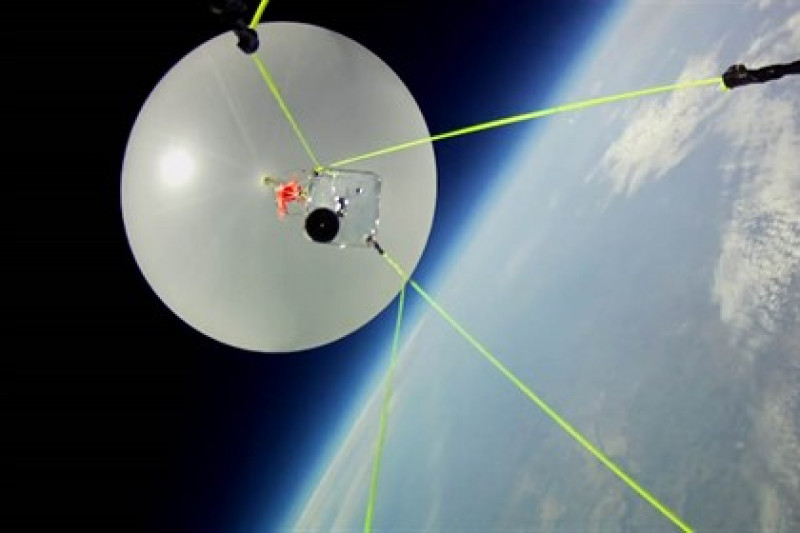
High Altitude Balloon At The Edge Of Space
As some of you may already know, Anita and I have been working with our local Radio Club on a project to promote STEM learning and interest in Amateur Radio among young people in our area. The idea is to work with kids grades 7-12 to plan, build, launch and recover a High-Altitude Balloon carrying Amateur Radio. Our balloon should be able to reach an altitude of about 100,000 ft before it bursts and the payload returns to earth via a parachute system. The payload will include a computer, GPS and a 2 meter APRS transmitter to record the balloon’s flight track, atmospheric data and altitude throughout the flight. The balloon will also carry a video camera and will capture a video record of the entire flight. You can learn more about our project here.

Thursday, February 09, 2017

The SmallSat Launcher Wars - Hackaday

Fascinating article on the current push at "SmallSat" technologies:

Over the last decade or so the definition of what a ‘small satellite’ is has ballooned beyond the original cubesat design specification to satellites of 50 or 100 kg. Today a ‘smallsat’ is defined far more around the cost, and sometimes the technologies used, than the size and shape of the box that goes into orbit.
There are now more than fifty companies working on launch vehicles dedicated to lifting these small satellites into orbit, and while nobody really expects all of those to survive the next few years, it’s going to be an interesting time in the launcher market. Because I have a sneaking suspicion that Jeff Bezos’ statement that “there’s not that much interesting about cubesats” may well turn out to be the twenty first century’s “nobody needs more than 640kb,” and it’s possible that everybody is wrong about how many of the launcher companies will survive in the long term
read more at:

http://hackaday.com/2017/02/09/the-smallsat-launcher-war/