Sunday, January 08, 2017

Full Duplex Radios for Satellites

Written by Andrew Koenig    (update from Patrick Stoddard compiled by me)
Following a discussion on the AMSAT-BB, I've decided to post the list of full duplex capable radios here, on my website. If there's a radio that needs to be added to the list, please use the Contact Us link above.
73 de KE5GDB
Handhelds: 
Tone Capable?
Comments
Icom IC-W2A
Yes
Icom IC-24AT
Optional
Tone optional with ????
Icom IC-W31A
Yes
Icom IC-W32A
Yes
Icom IC-32AT
Yes
Icom IC-Z1A
Yes
Icom IC-X2A
440MHz/1.2GHz
Yaesu FT-470
Yes
Yaesu FT-530
Yes
Yaesu FR-51R
Yes
DTMF Text Messaging
Kenwood TH-D7
Yes
Internal TNC
Kenwood TH-75A
Yes
Kenwood TH-77
Yes
Kenwood TH-78
Yes
Kenwood TH-79A
Yes
Alinco DJ-G5T
Yes
Alinco DJ-580T
Yes
Alinco DJ-582T
Yes
Alinco DJ-G7
Yes
Also has 1.2GHz
Tone Capable?
Comments
Chinese KG-UV8E, KG-UV8T, and KG-UV9D
Yes
"U/V" only. 2m desenses 70 cm downlink on “V/U” satellites like SO-50. The 70cm amateur satellite subband at 435-438 MHz is almost a perfect 3rd harmonic from the 2m satellite subband at 145.8-146.0 MHz - especially with SO-50
Kenwood TH-D72A
Yes
Best current full duplex HT
Mobiles: 
Tone Capable?
Comments
Alinco DR-570T
Yes/No
"E" version needs EJ-5U tone board
Alinco DR-590T
Yes
Alinco DR-599T
Yes
Alinco DR-600T
Yes
Alinco DR-605T
Yes
Alinco DR-610T
Yes
Alinco DR-620T
Yes
Alinco DR-635T
Yes
Kenwood TM731
Yes
Kenwood TM732
Yes
Kenwood TM733
Yes
Kenwood TM741
Yes
Triband with optional boards (see below)
Kenwood TM742
Yes
Triband with optional boards (see below)
Kenwood TM941
Yes
Triband with optional boards (see below)
Kenwood TM942
Yes
Triband with optional boards (see below)
Kenwood TM-D700/710
Yes
Internal TNC
Yaesu FT-4700
?
Yaesu FT-5100
Yes
Yaesu FT-5200
Yes
Yaesu FT-6200
Yes
440MHz/1.2GHz
Yaesu FT-8800
Yes
Yaesu FT-8900
Yes
Quad Band- 10m/6m/2m/440
Icom 2728H
?
Icom IC-2800
Yes
Icom IC-2340
Yes
Icom IC-2350
Yes
Icom IC-2710
Yes
Icom IC-2720
Yes
Icom IC-2820
Yes
Icom IC-Delta-100
Yes
2m/440/1.2GHz
Heathkit HW-24/HW-24A
?
Current mobile rigs
Tone Capable?
Comments
Alinco DR-635
Icom IC-2730A
Kenwood TM-D710
Kenwood TM-V71
Yaesu FT-8800R
Yaesu FT-8900R
Base Rigs:
Tone Capable?
Comments
Yaesu FT-726
Optional
Full duplex with OSCAR module; tone with FTE-36 board
Yaesu FT-736
Optional
Tone optional with the FTS-8; Quad Band (See Below)
Yaesu FT-847
Yes
Kenwood TS-2000
Yes
Optional 1.2GHz (TS2000X)
Icom 820
Yes
Icom 821
Yes
Icom IC-910H
Yes
Icom IC-970
Yes
Optional 1.2GHz (UX-97)
Kenwood TS-790A/E
Optional
Optional tone with TSU-5
Kenwood triband plugins (for TM741, TM742, TM941 and TM942):
UT-28S - 10 meters (50/10/5 watts)
UT-50S - 6 meters (50/10/5 watts)
UT-220S - 1.25m/220MHz (25/10/5 watts)
UT-1200S - 1.2GHz (10/1 watt(s))
Yaesu quadband plugins (for FT-736): 
FEX-736-50 - 6 meters
FEX-736- 220 - 1.25m/220MHz
FEX-736-1.2 - 1.2GHz
Last Updated on Wednesday, 10 June 2009 16:09

Friday, December 09, 2016

A Year of Firsts

I'm not a 'big gun'

I'm not a contester

I don't do "Field Day"

I don't do "DXpeditions"

But I have had some fun, fitting Ham Radio into my well over-crowded, many "balls in the air" type of life:

FIRST TIME:

  1. Use of my FT736R for a Sat contact
  2. Hitting the local club repeater from my home shack (really? you say? yeah... sad, huh? :) )
  3. First successful, and confirmed, FO-29 contact!
  4. First PSK31 contact
  5. First JT65 contact
  6. Use of a rotor at my home shack
  7. Use of a vertical at my home shack
  8. QSO Confirmations both in QRZ and LOTW 
  9. Outernet setup and reception (if you aren't familiar with this, just search for outernet.is... neat stuff!)

I've finally started getting somewhat comfortable again, sitting behind the mic, keyboard, key of my shack after many years of hiatus, and a little dabbling with HTs and sats.

Should have more time over the winter to explore more.

Should be able to finish up, test and hopefully *use* the TAPR Trakbox (btw, parts are in, but have to setup a "bench" to work on it)

Hope to "see" you on the air, if you want a satellite sched, reach out to KA2CZU on Zed, anytime!

73, Remember Jesus is the Reason for the Season! May you have a Peaceful, Blessed and Merry Christmas, Happy Holiday and a Happy New Year!


Friday, December 02, 2016

Thursday, December 01, 2016

TAPR Trakbox

I'm not sure I'm up to this task. It's been a while since I've done any serious soldering.

However, why not?  Why not get setup and give it a go. The price of the kit
was low enough to afford a learning opportunity.

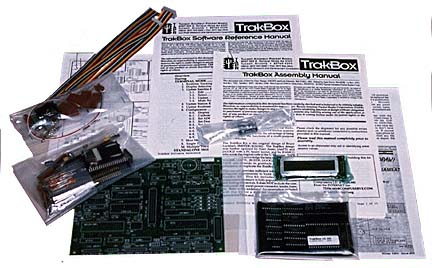
I need to make this:

out of this:

using nothing but this:


Wednesday, November 23, 2016

Tracking

Really excited about a new project: The TAPR Trakbox


While no longer sold/made, I recently purchased a "new in box" kit, and plan on
mating this up with the KR500 el / and a CDE/Hy-Gain az, rotor combo, in conjunction with the
FT-736.

This will up my ability to do winter, nighttime, sat work, since that seems to be the
time when I have the most free slots, and will save having to stand outside in the weather.

Description from TAPR:


The trakbox is a self-contained, stand-alone accessory for use with satellite stations. You simply select the satellite you wish to track from a front panel control and the TrakBox will steer your antennas in both azimuth and elevation to track the selected satellite when it is or above your horizon. In addition, if you have a radio with a computer interface, the TrakBox will tune your transmitter and receiver and correct them for doppler shift.
Trakbox includes a serial port to allow you to set the real-time clock (which is battery backed), your station location (latitude, longitude and elevation) and the keplerian elements for the satellites you are interested in (up to 40 satellites may be loaded, and the elements may be uploaded in ASCII in either the AMSAT or NASA formats). A two-line LCD display is updated every second, showing the azimuth and elevation of a satellite, along with the satellite ID and GMT. Once set up, TrakBox no longer needs to be connected to any other computer to operate.

Tuesday, November 15, 2016

How To Work The Sats

In case you are looking for information on how to work the Amateur Radio Satellites, there are a few excellent resources.

AMSAT

The main resource available to all Amateur Radio Operators is AMSAT itself.

I recommend joining AMSAT and helping to contribute to the various initiatives, but even if you don't, then you can find some great info at their
Station and Operating Hints page

QRZ

Many operators hang out on the QRZ Satellite and Space Communications forum

As I told a relative, there are a few dozen hard hard core Sat operators in the USA.
These hams are like 24x7x365 on or about Amateur Radio Satellites.

At least it seems that way :)

The even better news is that most are enthusiastic about helping anyone try to get on the air!

Give a shout out, give it a try!

PSK again

ok, so I hadn't made much progress getting PSK setup.

Finally got my IC-706 working with FLDIGI courtesy of Steve from xggcomm fame.

Win10 Nextbook tablet - mini usb adapters, xggcomm icom / usb cable and voila: PSK31
decoding.

So, the goal is to get familiar using PSK31 on 20meters so that I can move onto my next experiment:

http://www.frontiernet.net/~aflowers/dopplerpsk/dopplerpsk.html
Here also are the latest elements for PSAT:
PSAT
1 90720U          15234.36512451 +.00008395 +00000-0 +21488-3 0 0099
2 90720 054.9897 293.1329 0244566 052.6872 309.6216 15.1526532401420
When PSAT-1 is using the PSAT-1 callsign, that means the digipeater is off. But as of now, PSK31 experimentation is authorized.
28.120MHz PSK31 uplink and 435.350MHz FM downlink.
Bob, WB4aPR


Monday, October 31, 2016

The Outernet

Bob Bruninga has recently posted info to the AMSAT community about an interesting, free, public satellite project:

There is one other GEO  (possible AMSAT related) project going on.  That
is the OUTERNET satellites.  These are 6 GEO birds covering the entire
globe that anyone can build a downlink-only receiver using a Rasberry-PI,
a 1m dish, an LNB and a DSP dongle to receive the free content.  Their
mission is to deliver WEB content (one way) to anyplace on Earth.  Their
satellites exist and are working...

The news is that the content provider is willing to carry ham radio
content too..

We are proposing to make the "system" two-way for hams by having the
OUTERNET content provider tap into the APRS-Internet system and look for
amateur radio related OUTERNET traffic.  This way, any ham radio operator
on earth can originate traffic into the APRS-IS system marked-for OUTERNET
either by any of the existing APRS digipeater birds, or terrestrial
IGates, or HF Igates and that traffic will get into the system and into
the OUTERNET downlink.

Hence, a 2-way system for hams and ham-wannabees.

All the pieces are there... we are just trying to see how it could be
used...  Again, the remote-user can only originate single packet like
content due to the extremely small APRS input pipe. But the remote user
can Recceive the entire GLOBAL feed of APRS internet traffic...  SO how to
use that very unbalanced 2-way pipe is the area that is ripe for
exploration.

Here are the thoughts so far.. http://aprs.org/outnet.html

Bob, WB4APR

Tuesday, October 25, 2016

Hak 5 and the world of Amateur Radio

A cool blog has shown up, with one of the hosts newly acquiring a Ham Radio License:

https://www.youtube.com/watch?v=JpaD0BX9yZM

Sunday, September 11, 2016

Cheap Antenna Control

The AMSAT BB reflector had a great post the other day from Scott K4KDR.

He directed folks to:
http://k3rrr.com/cheap-computer-controlled-tv-rotor-for-amsat-satellites-and-includes-free-satellite-tracking-with-pstrotator-and-the-usb-uirt/

Cheap Computer Controlled TV Rotor for AMSAT Satellites And Includes Free Satellite Tracking With PstRotator and the USB-UIRT


How would you like to have a complete, cheap computer controlled rotator system for working the current half dozen (soon to be at least 8) active ham radio satellites for a total cost of around $200 including rotator – with excellent satellite tracking software and rig control included for free? 

Thanks to friend Robin Moseley, G1MHU, I’ve been able to finally and cheaply implement computer control tracking with my equally cheap TV rotor that I use for working the AMSAT satellites.
On top of that, I even ended up with excellent satellite tracking software, as a bonus, that actually works exactly the way it is supposed to, for no extra charge!
I know there are a lot of newbies and even a lot of oldies that might have an interest in getting on the amateur satellites – but who have been turned off by the high cost of a computer controlled antenna system. This approach might be a game changer for those with limited dollars who still want to work the birds without spending $2,000 or more on the antenna system.

enjoy!

Wednesday, August 24, 2016

Decoding packets from 3CAT2

awesome work by a couple of hams... in recording and decoding this data...

no plagiarism... will just link over to let you read!

http://destevez.net/2016/08/decoding-packets-from-3cat2/

Tuesday, July 26, 2016

Beyond... way beyond

ok, I'll fess up. I look at drudge daily. Really shocking, eh?

at any rate, noticed an article about a "strange place" where cellphones and wifi are not allowed!

EEK, really?

yes, Virginia, there is a Santa Clause.

I won't plagiarize Drudge, or the local station... if you want, you can read about it here

United States National Radio Quiet Zone

United States National Radio Quiet Zone
The National Radio Quiet Zone is a large area of land in the United States in which radio transmissions are strictly restricted by law to facilitate scientific research and military intelligence. It is located in the states of Wes…