Thursday, April 21, 2016

ISS

Managed my first *confirmed* Satellite QSO via ISS Packet on Tuesday

Used a

Baofeng UV-5R
To a Mobilinkd TNC2:


and APRSdroid running on a Motorola A855


all signals copied via an Elk Yagi


confirmed in the ARRL Log Book of the World!

edit: I should note that if I had substituted my homebrew 2mtr yagi (I did in fact work ISS packet last summer using the homebrew ant)... then this would possibly qualify as the lowest cost satellite packet setup around: the boafeng can be purchased for $35, the android phone (wifi only) was purchased for $10,  the mobilinkd tnc2 was fairly inexpensive as well....

Wednesday, March 30, 2016

Up and Away

So, I'm getting close to PSK-31 on NO-84

Close, in that I have the 10 mtr vertical (1/2 wave) up, and a tripod with
an elk for the 70 cm downlink.

Still have to get PSK-31 actually working, along with the satpc32 doppler/rig control
setup.

Looking for another shack pc to use, instead of the tablet. Tablets are "nice" but not
really user friendly for PSK-31 use.

So, more likely I'll get a cheap laptop and setup "something"

We'll see and keep the blog posted as actual progress is made

Monday, February 29, 2016

Control

In my quest to build out capabilities, I've been looking at semi-portable antenna setups.

I home brewed the "AMSAT" cheap satellite antennas, using foam and aluminum wire to actually get on the air with a couple of Baofeng HT's last year.

I eventually upgraded and setup my home station with an FT-736R, FT-817 and an Elk dual band log periodic antenna.

However, my brother W1GGM/7 just "bequeathed" (no, he has not passed on just yet... ) a
Yaesu G500A elevation rotor!  One half of the AZ-EL equation for base operation!

Therefore, I'm going to be looking into some kind of antenna tripod, azimuth rotor and dual antenna (likely) arrangement and try to match this up with SatPC32!

Great, more projects :D

Sunday, February 14, 2016

A Happy Valentine's Day to South Jersey... from Space

Today's NOAA-19 19:10z pass over the east coast came out nice, showing the Grand State of South Jersey's severe-clear conditions right now.

It's cold at around 20F, light breeze, but it is SUNNY :)

Thursday, February 11, 2016

Beyond voice

So in this new world of Satellite operation, I've been slowly, ever so slowly, catching up on digital technology, software, satelllite telemetry, and working other modes.

For some reason, I still want to hit my thumb with a hammer, so I stay off the simple things and jump right into what, for me, is the most complicated of approaches.

Sure, a grade school girl can, with the help of her dad, work all the FM satellites that pass on the east coast, but I'd like try to understand the world of SDR, digital modes, rig control, and yes eventually satellite antenna control, all via a Nextbook 8" win10 tablet if possible.

So far, I was able to try two SDR receivers:
  • The RTL-SDR dongle and
  • The SDRPlay SDR receiver

Both have their upsides.

The RTL-SDR/SDR# and WXtoIMG combo seems to consume fewer CPU cycles than the
SDRPlay/HDSDR/WXtoIMG combo for receiving satellite images. However, I seem to more consistently get decent images out of SDR# than HDSDR. Haven't quite figured that out yet.

A recent and decent image I received is from NOAA-19:


an earlier image that was a little less clear, from NOAA-18:


Monday, January 11, 2016

ReArrangements

Took advantage of the warm weekend to get up and rearrange some things.

I took down my my non-functional Ambient WS-2080 weather station and installed an MFJ-1754 onto the same mast. Ran the LMR-240 back to the shack.

Also setup an A99 10 mtr vertical, and re-arranged things in the shack so that I will be better positioned for PSK31 operation, once I figure out a way to tie together everything via software.

For NO-84, the architecture is a 10mtr uplink and a 70cm downlink so I need two antennas,
and two clients, one running a Doppler compensating software package up through the A99,
and the other a regular PSK31 client connected to the 70cm downlink.

Yesterday, I tested the receive portion using SDRplay SDR + HDSDR software, listening in on a decent pass of the ISS. I heard the AX.25 packets fairly clearly and that really was encouraging.

It was the first valid data stream I've seen via HDSDR. I didn't try decoding it, but am confident if AX.25 came through that clearly, I should have no trouble listening for a PSK31 stream, even on the much weaker downlink for a cubesat like NO-84.

Thursday, January 07, 2016

PSK-31 and HDSDR

My next project in the satellite world will be to attempt working PSK-31 through NO-84 or any other satellite that supports this mode.

First goal is to get my new Software Defined Radio, SDRplay, working using some software.

Check. Can receive.

Second goal is to get this hooked up with a digital mode software, running on my win10 tablet.

Working on this.

....

Final goal will be to get a PSK-31 transmission through a satellite, 10mtr uplink, 70cm downlink.

Stay tuned!

Monday, January 04, 2016

Progress

Having time that aligns with satellite passes is always a challenge.

Having to work Satellites manually, without aid of rotors, is a bigger challenge.

I was on FO-29 last week and finally found myself on the downlink, by whistling.
However, in the process, I called "CQ Satellite" a few times and stepped on a pileup
created by Yuri UT1FG/MM.  Big OOPs.

I worked using my FT-736R on the 2 meter uplink and the FT-817 on the 70cm downlink,
though there was no particular reason, other than the few extra watts the 736 puts out.

Throughout the pass, I manually tracked the sat using my Elk Yagi, mounted on a tripod.
It was clumsy, but it worked.

Now I need to figure out how to hear myself better. Perhaps using CW and making sure via
charts that I am not intentionally stepping on anyone.

Our friend, Doppler, got me this time.

Not again, my friend !  :D

Tuesday, December 15, 2015

Connectors

With the decline of the hobby electronics industry, here in New Jersey we have lost essentially all stores which stock cable, connectors and parts for electronic, specifically amateur radio, pursuits.

As such, I'm relegated to ordering connectors via an online supplier or, typically, amazon.

Here there are a plethora of Chinese suppliers who seem to provide perfectly adequate connectors.

IF they get the order right.

A big "IF"

Wednesday, December 09, 2015

Shack Picture

Update 1/4/2016:

New home for my current rigs:

  • IC-706
  • FT-736R
  • FT-817 and lastly
  • SDRplay SDR

Have an MFJ through-window feed panel and power supply setup.

Have 3 antennas outside, not permanently mounted yet:

  • A99, 10mtr 1/2 wave vertical
  • Elk 2m/70cm Log Periodic Yagi
  • MFJ 2m/70cm onmidirectional


Hey, I'm getting there :)

Monday, December 07, 2015

Satellite PSK

http://st2nh-blogger.blogspot.com/2013/11/satellite-psk.html

currently setting up a new home shack, have the components and among other
thinks... will try Sat PSK via IC706 -> up to a FT-817 down

edit: I think I'll actually be using the FT-736R down.... but we'll see :)

Should be fascinating!


Thursday, December 03, 2015

Destroy this one, and they'll all go.

I think this line by Spock, in Star Trek TOS, was the single reason I went into computers, even though I saw this episode years before my first encounter in a computer lab at Montclair State.

SPOCK: This one's the key. The circuit is now locked. Destroy this one, and they'll all go. 


Note that in my high school, learning about "computers" meant learning basic and submitting jobs through punched cards. I didn't take a computer class until freshman year in college.

I will also note that I never rose to greatness (big deal LOL) in either programming or position.

I have, however, been gainfully employed and have always enjoyed the technology and techniques applied to our world via the bits and bytes deployed in computers.

Now what is it about Satellites that drew me back to Ham Radio?

A sense of "fun"? Something different? Not sure.

One thing I'm sure of is that I'll never rise to "greatness" within the Ham Satellite community, but will definitely enjoy the ride of learning, and sense of adventure, as I point an antenna to an anticipated point of AOS and follow a track through LOS!

Tuesday, December 01, 2015

AO-85

Had the Elk out over the weekend:
Tried listening to a pass of ao-7. Totally dead, not even a beacon heard on a 60deg pass.

Then caught a nice pass of AO -85...strong as expected but with a lot of fading/dips. Did an a/b comparison to check out with or without my MFJ-916b duplexor with pleasant results using the ft-817

Next I will be checking out a good pass using the rtl-sdr using HDSDR on a nextbook tablet.

I do have several additions on order for "the shack"

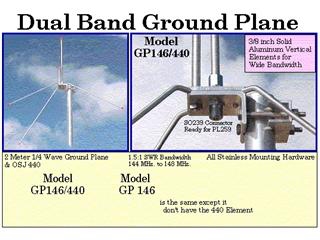
1. An Arrow GP146/440 antenna for general weather sat/highpower sat listening:
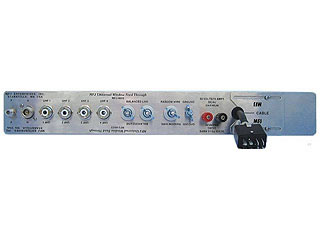
 2. An MFJ-4603 window feed through panel:
  
and

3. An SDR-PLAY software defined receiver:

 http://www.hamradio.com/images_manuf/H0-014408A.jpg


Saturday, October 31, 2015

The Elk

no, not the animal, but an Antenna:

picked up one of these:


Listened to a pass of AO-85.

More later

73,
KA2CZU

Tuesday, October 13, 2015

Oy Vey

so much has happened, and my hope of keeping this blog updated has faded than the worst tumbling satellite without adjusting for doppler shift, dipping behind the LOS horizon!

bottom line is that I'm all geared up, but without much time to get on the air!

Perhaps I'll be able to utilize some cold weather times for standing outside with a yagi pointed in the air ... DOH! :D

Wednesday, July 22, 2015

ISS SSTV

not for me... schedule didn't allow

ARISS SSTV images were transmitted this weekend from the amateur radio station in the ISS Russian Service Module to commemorate the 40th Anniversary of the Apollo-Soyuz Mission.
40 years ago this week, the historic joint Apollo-Soyuz mission was conducted. Apollo-Soyuz (or Soyuz-Apollo in Russia) represented the first joint USA-Soviet mission and set the stage for follow-on Russia-USA space collaboration on the Space Shuttle, Mir Space Station and the International Space Station.
Below images that where received during the night between the 18th and the 19th of July with a FUNcube Dongle Pro+, SDR# and RX-SSTV.
ISS-SSTV-19072015
ISS-SSTV-19072015
ISS-SSTV-19072015
ISS-SSTV-19072015
ISS-SSTV-19072015

Thursday, July 16, 2015

Satellites - APRS on Ham Radio Sats

Since the last time I was really active on Ham Radio was at Tinton Falls... I'm reclaiming this blog for my personal Sat adventures, to log notes, and remind myself of what the heck I'm up to :)

anyhow, Sats are free, if you're a ham operator.

some notes on two sats from Patrick:

Date: Wed, 15 Jul 2015 14:07:33 +0000
From: "Patrick STODDARD (WD9EWK/VA7EWK)" <amsat-bb@wd9ewk.net>
To: "amsat-bb@amsat.org" <amsat-bb@amsat.org>
Subject: Re: [amsat-bb] Can't digipeat APRS thru satellites
Message-ID:
    gh4fLseAV5zq7onVv-gHopHzD2M3WZLMo-TCijmbLQ@mail.gmail.com
>
Content-Type: text/plain; charset=UTF-8

Mark,

If you are trying to digipeat through NO-44, you will need to use
W3ADO-1 as the path. For NO-84, it won't digipeat anything sent
via PSAT, but you can use ARISS or APRSAT for the path. I have
not used NO-44 in a while, but when it is getting enough power
from its solar panels it does work with W3ADO-1. NO-84 is actually
a good APRS digipeater, even though not many stations are picked
up by the Internet gateways. It is possible that the gateways that
work fine with the ISS and its stronger signals just don't do as well
with the weaker signals from NO-84. With my TH-D72A and Elk, I
hear NO-84 well, and it seems to hear me OK once it is up a few
degrees above the horizon during its passes.

Hope to see/hear you soon on NO-84. I have logged one packet
QSO on that satellite, and will try for more. I also want to try the
10m/70cm PSK31 transponder, but for now my TH-D72A and Elk
antenna is able to use NO-84's packet digipeater well.

Good luck, and 73!

Tuesday, October 15, 2013

Friday, June 14, 2013

The Hock

Stopped by the Hockhockson at (whatever the old Grist Mill Restaurant is called nowadays) over the past weekend.

River was blown out due to 2013's first tropical storm of the season, Andrea